
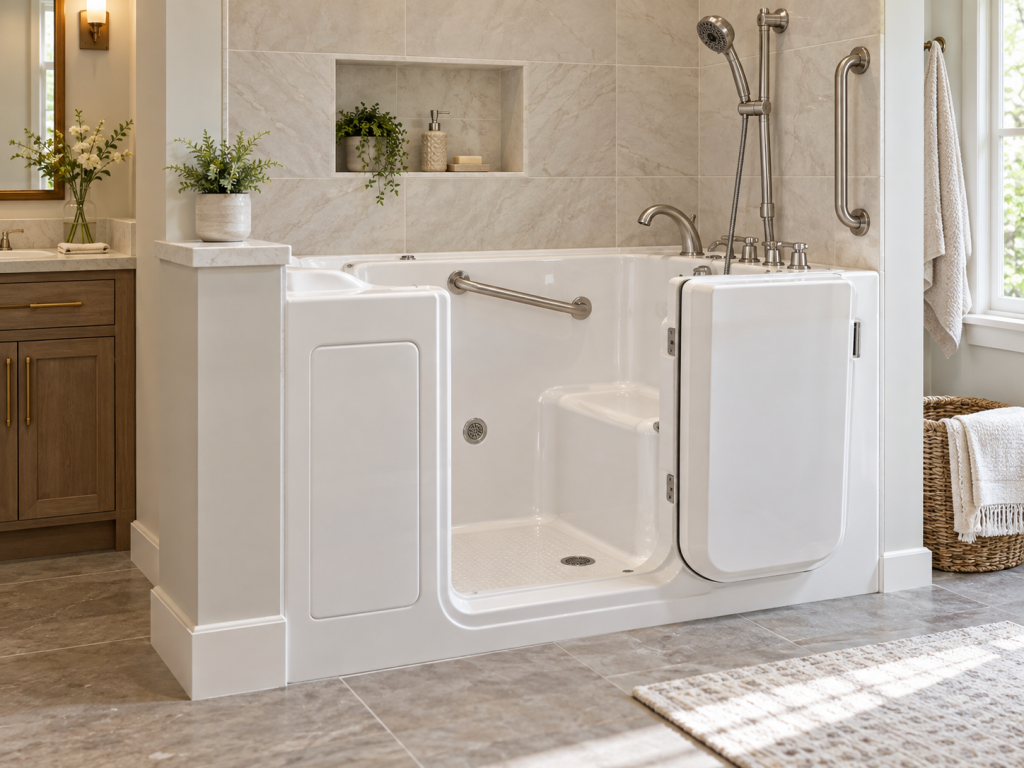
A walk-in tub can be worth it when climbing over a standard bathtub has become difficult but the homeowner still wants to sit and soak rather than switch completely to a shower. The low-entry door, built-in seat, handheld shower, and support features can make bathing more manageable.
But a walk-in tub is not automatically the safest or smartest choice for every bathroom. You have to enter before filling it and normally remain seated until the water drains. Installation can also cost significantly more than simply replacing a standard tub, and someone who later needs wheelchair-friendly access may find a curbless shower more adaptable. So before investing in walk-in bathtub installation, look at how the person actually bathes today—and how that routine may change over the next several years.
The Short Answer: When Is a Walk-In Tub Worth It?
A walk-in tub deserves serious consideration when you:
- Still enjoy baths and do not want to give up soaking
- Find a standard tub wall difficult to step over
- Prefer bathing while seated
- Want support features built into the bathing area
- Plan to remain in the home for several years
- Have a bathroom that can accommodate the tub properly
- Understand the fill-and-drain routine before buying
It may be less attractive if your main goal is fast daily showering, completely step-free access, the lowest remodeling cost, or easy wheelchair entry. That distinction is important. A walk-in tub solves a different problem than a tub-to-shower conversion.
What Makes a Walk-In Tub Different From a Regular Bathtub?
A conventional bathtub asks you to lift a leg over the side while balancing on the other foot. A walk-in tub adds a sealed door to the tub wall, creating a much lower entrance. Once inside, the user closes the door and sits on an integrated seat while the tub fills.
Features vary by model, but a walk-in tub may include:
- Low-entry door
- Built-in seating
- Textured tub floor
- Grab bars or hand supports
- Handheld shower wand
- Easy-reach controls
- Fast-fill or fast-drain features
- Heated seat options
- Air or water jets on some models
The existing walk-in bath design guide is helpful for comparing those features before focusing on brands or finishes.
The Biggest Pros of a Walk-In Tub
1. You Do Not Have to Climb Over a High Tub Wall
A lower entry can reduce the amount of leg lift required compared with a traditional bathtub. For someone who still moves independently but finds the side of the current tub awkward, that can make a meaningful difference.
If simply entering the existing tub has become the biggest problem, it is also worth reviewing other safer options for a hard-to-enter bathtub before deciding which solution fits best.
2. You Can Bathe While Seated
Standing through an entire shower is not comfortable for everyone. A built-in seat gives the user a stable place to sit during bathing. This can also reduce the need to lower the body to the bottom of a traditional bathtub and then stand back up afterward.
Seat height, width, depth, and access still matter. A seat that looks comfortable in a brochure may feel very different when someone actually has to transfer onto it.
3. You Keep the Ability to Soak
Some homeowners genuinely enjoy baths. Others want a deeper bathing experience while sitting upright. Replacing the bathtub with a shower would remove that option.
This is why the decision should not be reduced to “which one has the lowest entry?” The article comparing a walk-in shower with a bathtub for aging in place explores that lifestyle difference in more detail.
4. Useful Support Features Can Be Built Into One Space
Instead of treating accessibility as a collection of afterthoughts, the tub can be planned around the user’s routine.
For example:
- A grab bar can support entry.
- The seat provides a resting position.
- A handheld showerhead can reduce reaching and turning.
- Controls can be positioned within easier reach.
- A textured floor can improve footing.
These details matter more than decorative upgrades when the goal is keeping the bathroom comfortable over the long term.
5. Many Models Can Work Within an Existing Tub Area
Many models are designed for spaces similar to a standard bathtub alcove. However, measurements, doorway access, drain position, water supply, electrical needs, door swing, and surrounding surfaces must all be checked before selecting a unit.
If most of the bathroom still works well, a focused bathtub or shower remodel may be more sensible than replacing the whole room.
The Cons Matter Just as Much
A good “Is it worth it?” answer has to include the inconvenient parts too.
1. You Have to Wait Inside While It Fills and Drains
A walk-in tub’s watertight door generally cannot be opened while the tub is full.
That means the user enters an empty tub, closes the door, and waits while it fills. After bathing, the water has to drain sufficiently before the door can be opened. For some people, this is no problem. For others, sitting wet while the tub drains may feel cold or inconvenient.
2. Walk-In Tubs Can Be Expensive
Current 2026 national cost estimates from Angi put complete walk-in bathtub installation at an average of about $8,000, with many projects falling between roughly $4,000 and $15,000. Larger, wheelchair-accessible, hydrotherapy, or highly customized models can cost more.
Before investing heavily in one fixture, it can help to review how to plan a bathroom remodel without wasting money.
3. The Tub May Need a Lot of Hot Water
A deeper tub can require considerably more hot water than a quick shower.
That means the contractor should look at the existing water heater rather than focusing only on whether the new tub physically fits.
Ask:
- What is the tub’s usable water capacity?
- Can the current water heater supply enough hot water?
- How quickly can the tub fill?
- Will any plumbing changes improve flow?
- Does the selected tub require electrical work?
Discovering the water heater is undersized after installation is an expensive way to learn that lesson.
4. Low Entry Does Not Mean Zero Entry
Walk-in tubs reduce the height of the barrier, but there is still normally a threshold.
Someone who can lift a foot several inches may use it comfortably. A person who requires a wheelchair or needs completely roll-in access may need a different design. This is why a walk-in tub should never be labeled “accessible” without asking: accessible for whom?
5. Future Mobility Can Change the Equation
A tub that works well today may be less adaptable if mobility changes substantially. For a homeowner planning around possible wheelchair access or caregiver-assisted bathing, a larger low-threshold or curbless shower may offer more room.
That is why good bathroom remodeling should consider the next several years, not just the present month.
Who Does a Walk-In Tub Work Best For?
The Bath Lover Who Struggles With the Tub Wall
This is probably the clearest fit.
If someone still enjoys soaking but the high side of a standard bathtub has become the problem, a walk-in tub preserves the bathing experience while reducing the entry barrier.
Someone Who Prefers Seated Bathing
A person who finds long periods of standing uncomfortable may appreciate the built-in chair-style seat.
The important question is whether the user can enter, turn, sit, stand, and exit comfortably—not simply whether they can step through the door.
A Homeowner Planning to Age in Place
A walk-in tub can become part of a larger plan that includes:
- Better bathroom lighting
- Support bars
- Easier-reach storage
- Improved flooring
- Wider movement areas
- Updated fixtures
If several of these parts of the room also need work, compare the tub project with full bathroom remodeling instead of planning each improvement separately.
Someone Who Plans to Stay in the Home
Walk-in tubs make more sense when the user expects to benefit from them regularly over time.
If the home may be sold soon, personal usefulness should be weighed against cost and how future buyers may view such a specialized fixture. Resale response varies, so this is a good question for a local real estate professional rather than something to assume.
Who May Be Better Off With a Walk-In Shower?
A walk-in shower may make more sense when the homeowner:
- Rarely or never takes baths
- Wants the lowest practical entry
- Wants to get in and out quickly
- Needs more open standing or caregiver space
- Wants the bathroom to feel larger
- May require a walker or wheelchair later
- Wants more flexibility in bench and grab-bar placement
If the existing bathtub is already unused, investing in another form of bathtub may not solve the real issue.
A tub-to-shower conversion may instead create a larger bathing area with seating, support bars, a handheld showerhead, easier entry, and more adaptable open space.
Walk-In Tub or Walk-In Shower? Match the Product to the Priority
| Your Priority | Walk-In Tub | Walk-In Shower |
| Deep soaking | Strong fit | Limited |
| Seated bathing | Built-in seat | Bench or fold-down seat can be added |
| Very low entry | Low threshold | Low-threshold or curbless options |
| Fast daily bathing | Requires fill/drain time | Strong fit |
| Wheelchair adaptability | Model-dependent | Often more flexible |
| Open bathing space | More enclosed | Usually more open |
| Keeping a tub | Yes | No |
Neither is automatically better.
The best choice follows the person using it.
What Actually Determines the Cost of a Walk-In Tub?
The purchase price is only one piece of the project.
Tub Size and Type
A basic soaker usually costs less than a larger unit with air jets, water jets, a heated seat, or specialized accessibility features.
Plumbing
Keeping the drain and supply lines in useful locations can reduce unnecessary work. Moving them increases the project scope.
Electrical Needs
Certain tubs with pumps, heaters, or other powered features may require dedicated electrical work.
Water Heater Capacity
A larger bathing volume may expose limitations in the home’s current hot-water system.
Surrounding Bathroom Condition
Removing an old bathtub can uncover:
- Water damage
- Weak subfloor
- Damaged wall backing
- Old plumbing connections
- Worn flooring near the tub
If several parts of the room already need attention, use the broader question—is the bathroom remodel itself worth it?—rather than evaluating the tub price alone.
Seven Questions to Ask Before Buying a Walk-In Tub
A showroom demonstration should not be the end of the decision.
Ask these questions first:
- What is the actual step-over height?
- Can the intended user sit down and stand up comfortably?
- How long does this specific model take to fill and drain?
- Can my current water heater support it?
- Which direction does the door open, and is there enough room?
- What plumbing, electrical, flooring, or wall work will installation require?
- Would a walk-in shower solve the same problem more effectively?
That final question is especially important.
A Simple “Worth It?” Checklist
A Walk-In Tub May Be Worth It If:
I still want to take baths regularly.
A standard tub wall has become difficult to cross.
Sitting while bathing is comfortable for me.
I can safely step through the proposed entry.
Waiting while the tub fills and drains will not bother me.
My bathroom can accommodate the tub properly.
My plumbing and water heater can support it.
The total installed cost makes sense for my budget.
I expect to use the tub for several years.
Compare a Walk-In Shower First If:
I almost always shower rather than bathe.
Completely step-free access is important.
I want more open movement space.
Future wheelchair access is a concern.
I want a faster in-and-out bathing routine.
I want a more flexible layout for seating and support features.
When several of the second group apply, review the available walk-in shower and tub remodeling options before buying a specialized tub.
FAQs About Walk-In Tubs
Are walk-in tubs actually safer than regular bathtubs?
They can reduce the need to climb over a high bathtub wall and often include features such as seating, grab bars, textured floors, and handheld showerheads. However, safety still depends on the individual user’s mobility, the tub’s threshold, floor traction, support placement, and proper installation.
Do you have to sit in a walk-in tub while it fills?
Generally, yes. Because the door must remain sealed while water is in the tub, the user normally enters first and remains inside while it fills. The water must also drain before the door can be opened.
Can a walk-in tub replace a normal bathtub without remodeling the whole bathroom?
Often it can be installed in or near the existing tub area, but measurements and site conditions determine the actual scope. Plumbing, electrical service, drain location, flooring, walls, doorway access, and water-heater capacity should be evaluated first.
Is a walk-in tub better than a walk-in shower for seniors?
It depends on the person’s routine and mobility. Someone who enjoys soaking and prefers seated bathing may prefer a walk-in tub. Someone who wants very low entry, quicker bathing, or more adaptable movement space may be better served by a walk-in shower.
How long does a walk-in tub last?
Service life depends on the product, installation quality, usage, maintenance, door seal, fixtures, pumps or jets, and other components. Before buying, review both the tub warranty and the installation warranty and ask what ongoing maintenance is required.
Make the Decision Around the Person, Not the Product
A walk-in tub can be a valuable bathroom upgrade—but only when it solves the right problem. If someone still loves bathing, wants a built-in seat, struggles with a high tub wall, and can comfortably use the low-entry door, it may be a strong long-term investment. If the real priority is completely open access, faster showers, larger movement space, or greater future adaptability, a walk-in shower may be the better direction.
Vision Sync Bath installs walk-in tubs along with walk-in showers, tub-to-shower conversions, and full bathroom updates throughout its Colorado service area. That allows homeowners to compare solutions rather than starting with the assumption that one particular product must be right. Explore the walk-in bathtub installation service, browse additional advice in the Bathroom Remodeling Learning Center, or contact the remodeling team to evaluate the existing tub area before deciding which bathing option fits best.