
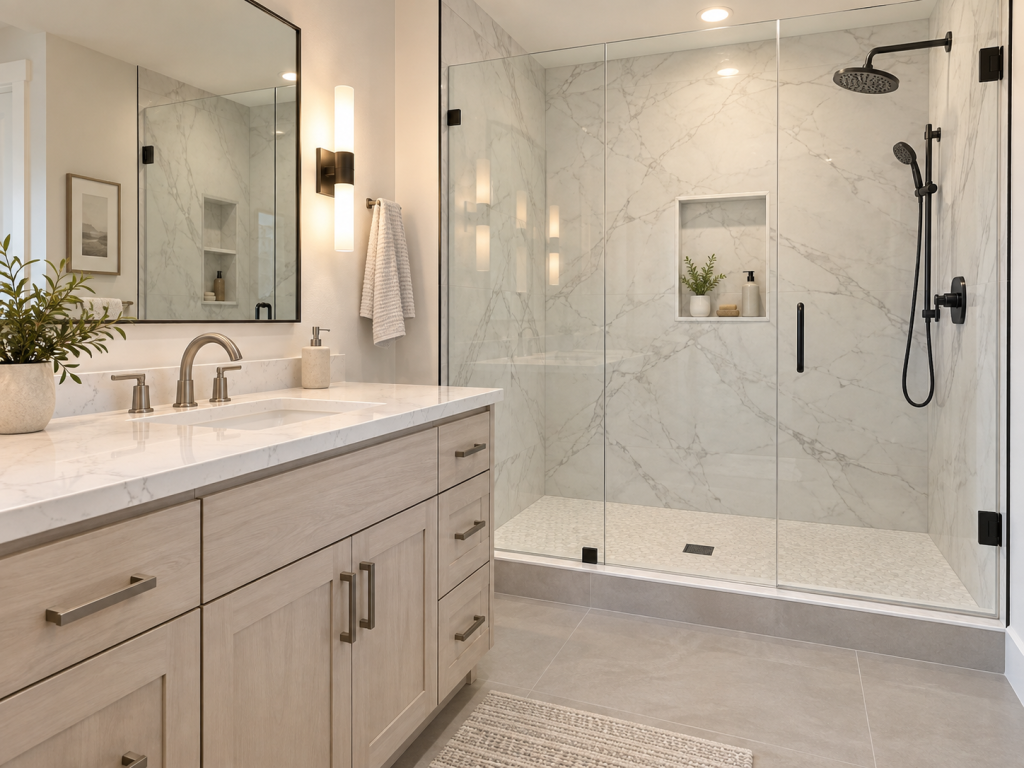
A bathroom can work perfectly well today and still become frustrating a few years from now. A high tub wall may become harder to step over. Reaching for shampoo from the floor may feel awkward. A slippery shower base or poorly placed control can suddenly matter much more than the color of the tile. That is why aging-in-place bathroom planning works best before mobility becomes a problem.
The goal is not to make a bathroom look clinical. It is to create a shower that feels comfortable now while giving the homeowner more support, easier movement, and flexibility later. For people deciding between keeping a bathtub and changing the bathing area, this guide to walk-in showers versus bathtubs for aging in place is a useful starting point.
Start With the Shower Entry
The first feature to consider is also the one used every single day: the entrance.
Stepping over the side of a bathtub requires balance, hip movement, and the ability to lift one foot while standing on the other. A lower shower entry reduces that movement. For many homeowners, replacing an unused tub with a tub-to-shower conversion designed for easier entry can remove one of the biggest barriers in the room.
Depending on the bathroom and project, homeowners may consider:
- Low-threshold shower bases for a smaller step
- Curbless entries for little or no raised transition
- Wider shower openings for easier movement
- Door placement that does not create another obstacle
- Clear entry space outside the shower
The U.S. Access Board limits thresholds in accessible roll-in showers to ½ inch maximum and notes that flush transitions can make entry easier for wheeled mobility devices. Those standards do not automatically apply to every private home, but they offer useful reference points when planning for future mobility.
1. Grab Bars Should Be Planned Before They Are Needed
Grab bars are much easier to integrate during a remodel than after the shower is finished.
The National Institute on Aging recommends grab bars in tubs and showers as part of making a home safer for older adults.
The important detail is where the support is needed.
A useful plan may include support:
- Near the shower entrance
- Along the main shower wall
- Close to a seat
- Where a person turns or changes position
Pro Advice: Do not choose grab-bar locations only by appearance. Think through the movements: entering, turning, standing, sitting, and getting back up.
2. Choose Flooring for Wet Feet, Not Just Looks
A beautiful shower floor is not useful if it feels uncomfortable or unstable when wet.
The National Institute on Aging recommends nonslip surfaces or strips in areas that may become wet.
During a remodel, ask about:
- Surface texture
- How the material feels under bare feet
- Drainage
- Grout maintenance
- Cleaning needs
- Transitions between the shower and bathroom floor
This decision becomes especially important during a broader bathroom remodeling project where flooring outside the shower may also be changed.
3. Add a Seat Before Standing Becomes Difficult
A shower seat is not only for someone who cannot stand. It can make shaving, washing feet, recovering from surgery, or simply taking a longer shower more comfortable.
Common options include:
Built-in bench:
Feels like a permanent part of the shower and can offer a larger sitting surface.
Fold-down seat:
Provides seating when needed but can fold away to preserve standing room.
Portable shower chair:
Requires less construction but may not feel as integrated into the shower design.
The best choice depends on shower size, who uses the bathroom, and whether seated bathing may become important later.
4. A Handheld Showerhead Adds More Flexibility Than It Seems
A fixed showerhead works well while someone is standing comfortably. A handheld shower makes the same space more adaptable.
It can help someone:
- Shower while seated
- Rinse without turning as much
- Wash feet and lower legs more easily
- Assist another person with bathing
- Clean the shower walls and seat
For a long-term bathroom plan, pairing a fixed showerhead with a handheld option often gives the household more flexibility than choosing only one.
5. Put Controls Where They Can Be Reached Easily
A shower may have an easy entrance and still be awkward to use if the controls are in the wrong place.
Think about whether someone has to:
- Step fully into the shower before turning on the water
- Reach through the spray
- Twist a difficult knob
- Stretch from a shower seat
- Turn around on a wet floor to change temperature
Even when a homeowner is not building an ADA-compliant bathroom, the principle is useful: controls should come to the user rather than forcing the user to move awkwardly toward them.
6. Do Not Forget Lighting
Aging-in-place planning is not only about mobility. Good visibility matters too. A larger full bathroom remodeling project creates an opportunity to look at the whole lighting plan rather than the shower alone.
Consider lighting near:
- The shower entrance
- Vanity and mirror
- Toilet area
- Main walking path
- Storage areas
The goal should be even, useful light—not simply making the room brighter everywhere.
The Features Worth Prioritizing First
If the budget cannot cover every possible upgrade, prioritize the features that affect everyday movement.
High-Priority Features
- Lower or barrier-free shower entry
- Secure grab-bar locations
- Slip-conscious shower flooring
- Handheld showerhead
- Reachable controls
- Adequate lighting
Strong Future-Ready Additions
- Built-in or fold-down seating
- Wider shower opening
- Easy-to-reach storage
- Wall reinforcement for future grab bars
- Simple fixtures that are easy to operate
- Clear space outside the shower
These are usually more meaningful for long-term use than purely decorative upgrades.
Homeowners trying to control project costs can use the site’s guide to planning a bathroom remodel without wasting money to separate high-value improvements from changes that may not solve an actual problem.
FAQs About Aging-in-Place Shower Features
What is the most important shower feature for aging in place?
An easier entry is often one of the first features to consider because it reduces the need to step over a high tub wall or curb. Grab bars, good footing, reachable controls, and lighting are also important.
Should grab bars be installed before they are needed?
Planning them during a remodel is smart. Even if the bars are not installed immediately, wall reinforcement can make it easier to add secure support later.
Is a shower bench worth adding?
It can be. Seating gives someone the option to bathe while seated and can also make tasks such as washing feet or shaving easier. Fold-down seating can preserve space when the seat is not being used.
Is a curbless shower required for aging in place?
No. A curbless entry can offer excellent step-free access, but a low-threshold shower may still provide a significant improvement over a traditional bathtub. The right option depends on mobility needs and how the existing bathroom is constructed.
Can an aging-in-place shower still look modern?
Yes. Low-entry showers, handheld fixtures, seating, modern grab bars, solid-surface walls, and clear glass can all be incorporated into a contemporary bathroom without giving the room an institutional appearance.
Build the Shower for the Life You Want to Keep Living
Aging in place is really about keeping everyday routines easy for as long as possible. The best shower features are not complicated. Reduce difficult steps. Add dependable support. Create a place to sit if needed. Keep controls and toiletries within reach. Choose a floor that feels steady underfoot. Make sure the room is easy to see and move through.
Vision Sync Bath works with Colorado homeowners on walk-in showers, tub-to-shower conversions, and complete bathroom updates built around daily comfort and long-term use. Homeowners can explore more practical ideas in the Bathroom Remodeling Learning Center or discuss a future-ready shower through the site’s contact page. A good aging-in-place remodel should not make the bathroom feel designed for old age. It should make the bathroom easier to live with at every age.