
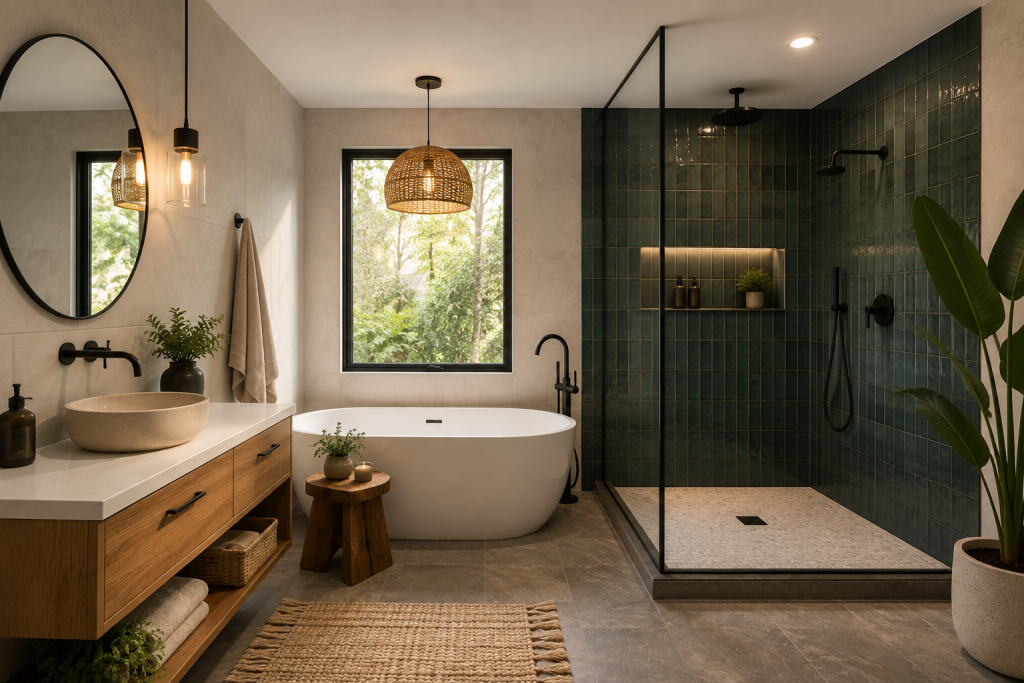
Acrylic, solid surface, and tile can all work well for shower walls. The best choice depends on how you want the shower to look, feel, and function.
Some homeowners want fewer grout lines and easier cleaning. Others care more about custom patterns and design freedom. Cost, installation time, repairability, and water management also matter.
There is one useful distinction to understand first. Acrylic panels and solid-surface walls are not always made from completely unrelated materials. Some solid-surface products use acrylic resin mixed with mineral fillers. Corian Solid Surface, for example, contains acrylic resin and natural minerals.
Here is how the three options compare.
Acrylic vs. Solid Surface vs. Tile at a Glance
| Factor | Acrylic | Solid Surface | Tile |
| Cleaning | Usually simple, with few joints | Usually simple, with limited seams | More grout joints to maintain |
| Grout | Usually none across the wall panels | Usually none across the wall panels | Commonly used |
| Design flexibility | Moderate | Moderate to high | Very high |
| Surface repair | Depends on the product and damage | Some products can be repaired or refinished | Individual tiles may sometimes be replaced |
| Installation complexity | Often lower | Moderate | Often higher |
| Water management | Depends on the complete system | Depends on the complete system | Requires a properly built waterproofed assembly |
| Visible seams | Depends on the panel system | Can be less noticeable | Grout lines remain visible |
| Cost | Project-specific | Project-specific | Project-specific |
| Good fit for | Easy-care remodels | Low-maintenance, continuous-looking surfaces | Highly customized designs |
The table gives you a quick starting point. The better choice becomes clearer once you understand how each material works.
What Is the Difference Between Acrylic, Solid Surface, and Tile?
These materials may serve the same purpose, but they are made and installed differently.
What Are Acrylic Shower Walls?
Acrylic shower walls usually use molded or sheet acrylic panels. Many acrylic bath products use PMMA, or polymethyl methacrylate, as the acrylic material.
Because these systems use large wall panels, they usually have fewer joints than traditional tile.
Cleaning requirements depend on the manufacturer. For example, American Standard recommends mild cleaning products and warns against abrasive cleaners on its high-gloss acrylic bath products.
The exact panel thickness, finish, construction, and installation method depend on the product.
What Are Solid-Surface Shower Walls?
Solid surface is a composite surfacing material made with resins and mineral fillers.
Corian Solid Surface, for example, is composed of about one-third acrylic resin and two-thirds natural minerals. This is why acrylic panels and solid-surface panels should not be treated as chemically opposite materials.
The difference is mainly in how the products are formulated, fabricated, and installed.
Solid-surface systems can create a smooth wall with limited or less noticeable seams. Some products can also be repaired or refinished after scratches or other surface damage. Corian, for example, publishes specific repair and refinishing procedures for its solid-surface material.
Repair options still depend on the product and the type of damage.
What Makes Tile Different?
For this comparison, “tile” mainly refers to ceramic and porcelain shower tile. Natural stone can have different sealing and maintenance requirements.
A tiled shower uses individual tiles installed over a properly prepared shower-wall assembly. Mortar, grout, substrate preparation, and water management all play a role.
Tile offers a wide range of choices for:
- Color
- Pattern
- Size
- Texture
- Layout
- Decorative details
That flexibility makes it a strong option for homeowners who want a highly customized shower.
However, tile is the visible finish. Tile, mortar, and grout should not be treated as substitutes for a required waterproofing system. LATICRETE’s technical guidance specifically notes that grouts and mortars are not replacements for waterproofing membranes.
Which Shower Wall Is Easiest to Clean?
If low maintenance is your main goal, grout joints and seams matter.
Acrylic panels typically have fewer joints than tile. That means there are fewer grout lines to scrub.
Solid-surface systems also use larger sections, which can create a smooth appearance with limited seams.
Both materials still need regular cleaning. Acrylic products may also require non-abrasive cleaners to avoid damaging the finish.
Tile itself can be simple to wipe down, but grout adds another surface to maintain.
Sealing requirements vary by grout product. It is not accurate to say every grout must be sealed. For example, LATICRETE states that sealing its PERMACOLOR Grout is optional rather than required.
If avoiding grout cleaning is a major priority, acrylic or solid surface may be worth considering.
Vision Sync Bath emphasizes easier-care wall systems and fewer grout lines within its bathtub and shower remodeling options.
Do Acrylic, Solid Surface, and Tile Handle Water the Same Way?
The visible wall finish is only one part of a shower.
A complete shower also needs proper water management around areas such as:
- Corners
- Seams
- Valve openings
- Niches
- Shower-base connections
- Wall transitions
- Drainage
With tile, the tile and grout should not be relied on as the complete waterproofing system. The full assembly needs the appropriate water-management materials and installation method.
Panel systems work differently, and requirements vary by manufacturer. Their joints, corners, openings, and shower-base connections still need proper installation.
This is why choosing the wall finish is only part of planning the remodel.
Vision Sync says it reviews details such as existing wall condition, moisture issues, plumbing position, drainage, waterproofing, and shower-base fit before a tub-to-shower conversion.
You can learn more about its tub-to-shower conversion process.
Which Material Offers the Most Design Flexibility?
Tile usually provides the widest range of layout possibilities.
Homeowners can combine different:
- Tile sizes
- Shapes
- Colors
- Patterns
- Grout colors
- Decorative accents
That makes tile useful when a custom layout is the main priority.
Acrylic panels offer a different approach. Available systems may come in various colors, textures, and printed or molded patterns, depending on the manufacturer.
Solid surface can also come in different colors and visual styles. Large panels may create a more continuous appearance with fewer visible joints.
If you want detailed patterns or highly customized layouts, tile may give you more freedom.
If you prefer a cleaner wall appearance with fewer joints, a panel system may better match your priorities.
Which Shower Wall Material Is Easier to Repair?
No shower-wall material is completely immune to damage.
The important question is what your options are if the surface becomes scratched, chipped, cracked, or stained.
Acrylic repair options depend on the product and depth of the damage.
Some solid-surface materials can be repaired or refinished. Corian, for example, provides procedures for treating scratches, stains, impact marks, and more serious surface damage.
Tile works differently. An individual damaged tile may sometimes be replaced. However, finding an exact match can become harder if the original tile is no longer available.
If long-term repairability matters to you, ask about the exact product before making a final choice.
Which Option Is Faster to Install?
Wall material can affect how many installation steps a shower remodel requires.
Large panel systems may reduce some of the individual placement work involved with tile.
Tile typically involves more steps, including layout, setting individual pieces, grouting, and allowing materials to set or cure.
That does not mean every panel shower is quick or every tile shower takes a long time.
Demolition, wall damage, plumbing changes, shower-base preparation, niches, accessories, and project size can all affect the schedule.
Vision Sync says many of its walk-in shower projects may be completed in as little as one to two days, depending on the home and project scope. That is not a guaranteed timeline for every project or material.
If you are still planning the overall project, review what to consider before adding a walk-in shower.
How Does Shower Wall Material Affect Cost?
There is no universal rule that acrylic is always the least expensive or tile is always the most expensive.
The total project cost depends on more than the wall finish.
Cost factors may include:
- Product selection
- Shower dimensions
- Demolition
- Wall preparation
- Water-management work
- Layout complexity
- Labor
- Niches and shelving
- Fixtures and accessories
- Plumbing changes
- Hidden moisture or wall damage
A detailed tile pattern may require more layout and installation work than a simpler design. Panel systems can reduce some installation steps, but product choice and site preparation still affect the final quote.
Solid-surface products also vary by manufacturer, finish, fabrication needs, and installation requirements.
For that reason, a project-specific quote is more useful than assuming one material always costs more.
For broader budgeting guidance, see Vision Sync’s article on planning a bathroom remodel without wasting money.
Which Shower Wall Material Fits Your Priorities?
Instead of looking for one universal winner, compare each material with the way you plan to use the bathroom.
Consider Acrylic If You Prioritize:
- Fewer grout joints
- Straightforward cleaning
- Panel-style installation
- A practical option for a shower remodel
- Less grout maintenance
Acrylic may fit homeowners who want an easy-care shower without a custom tile layout.
Consider Solid Surface If You Prioritize:
- A smooth, continuous-looking surface
- Limited or less noticeable seams
- Low-maintenance cleaning
- A composite panel system
- Potential repairability, depending on the product
Solid surface may appeal to homeowners who prefer panels but want a different look or feel from standard acrylic systems.
Consider Tile If You Prioritize:
- Maximum design freedom
- Custom layouts
- Decorative patterns
- A wide range of individual finishes
- A traditional tiled appearance
Tile may fit better when design flexibility matters more than reducing grout lines or installation steps.
What Should You Ask Before Choosing a Shower Wall System?
A product name alone does not tell you everything about the finished shower.
Before choosing a system, ask your remodeler:
- What wall material is actually being installed?
- Is it acrylic, solid surface, tile, or another product?
- What is the product made from?
- What water-management system will be used?
- How will seams and corners be treated?
- What preparation is needed behind the finished wall?
- Which cleaners does the manufacturer recommend?
- What happens if the surface is scratched or damaged?
- How will the material affect the project timeline?
- Are niches, shelves, and accessories compatible with the system?
- What product or installation warranty applies?
These questions help you compare the complete installation, not just the appearance of the wall.
How Vision Sync Bath Helps Homeowners Compare Shower Wall Options
Choosing a wall material is one part of the larger shower-remodel decision.
Vision Sync Bath currently lists acrylic or solid-surface wall systems among the options used in its tub-to-shower conversion work. It also says its team reviews the existing tub space, plumbing position, wall condition, moisture issues, drainage, and shower-base size before recommending a plan.
Vision Sync is based in Broomfield, Colorado, and its current website lists shower remodeling, tub-to-shower conversions, walk-in showers, and other bathroom remodeling services.
This article compares tile because it is an important homeowner decision option. Vision Sync’s current public service pages specifically verify acrylic and solid-surface wall systems, so homeowners interested in tile should ask the company directly about current project options.
Explore Vision Sync’s tub-to-shower conversion options or bathtub and shower remodeling services for more details.
FAQs About Shower Wall Materials
What is the easiest shower wall material to clean?
Acrylic and solid-surface panel systems often reduce grout cleaning because they use larger wall sections with fewer joints.
Tile can also be easy to wipe down, but grout adds another surface that needs regular care. Cleaning requirements vary by product, finish, grout type, and local water conditions.
Is acrylic better than tile for shower walls?
It depends on your priorities.
Acrylic may fit better if you want fewer grout joints and simpler maintenance. Tile may fit better if custom patterns and design flexibility matter more.
What is the difference between acrylic and solid surface?
Typical acrylic shower systems use molded or sheet acrylic panels.
Solid-surface materials are composite surfaces made with resins and mineral fillers. Some solid-surface products use acrylic resin, so the two categories can be related without being the same type of product.
Do solid-surface shower walls have grout?
Solid-surface panel systems generally do not use traditional tile grout joints across the wall.
They still have seams or joints that must be handled according to the product’s installation system.
Does tile need waterproofing behind it?
A tiled shower needs a properly designed water-management system. Tile, mortar, and grout should not be relied on as substitutes for a required waterproofing membrane or system.
Which shower-wall material is best for a tub-to-shower conversion?
The answer depends on the existing bathroom, maintenance goals, design preferences, and project scope.
Vision Sync currently lists acrylic and solid-surface wall systems for its tub-to-shower conversions.
Which shower-wall material costs the most?
There is no universal answer.
Material selection, wall size, demolition, labor, water-management preparation, accessories, layout complexity, and existing conditions can all affect the final project cost.
Choose a Shower Wall That Fits Your Bathroom
Acrylic, solid surface, and tile each offer different tradeoffs.
Acrylic can reduce grout lines and simplify routine cleaning. Solid surface can provide a smooth panel-style finish with repair options on some products. Tile offers the greatest freedom for custom patterns and layouts.
The visible wall material is only part of the decision. Water management, wall preparation, installation quality, maintenance, and project scope matter too.
If you are considering a shower remodel or tub-to-shower conversion, review Vision Sync’s current wall-system options and discuss how they fit your existing space.