
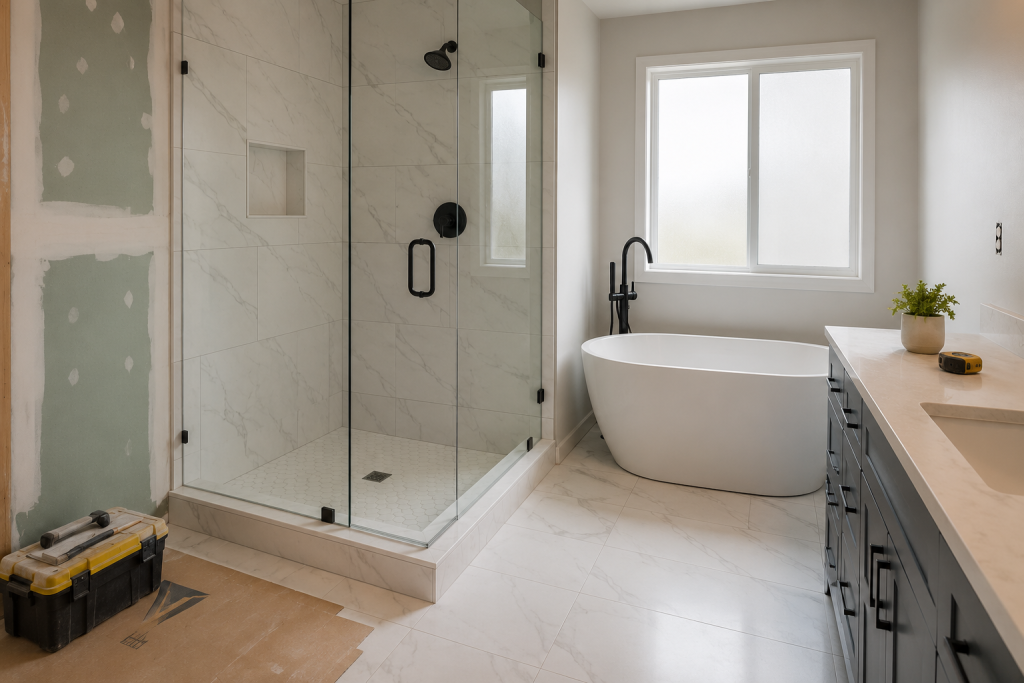
Most bathroom remodels don’t get delayed because the work is difficult—they get delayed because homeowners are given unrealistic expectations from the start. One contractor says a week, another says a month, and somewhere in between you’re trying to figure out when you’ll have a working bathroom again.
The truth is, there isn’t one timeline that fits every remodel. The scope of the project, permit requirements, material availability, and even what your contractor discovers after demolition all affect how long the job will take.
This guide breaks down realistic bathroom remodel timelines based on the type of project, explains what causes the biggest delays, and shows you what to expect before work begins—so you can plan with confidence instead of relying on rough estimates or national averages that don’t reflect remodeling projects in Colorado.
The Short Answer
| Project | Typical Timeline |
| Tub replacement | 1 day |
| Shower replacement | 1–2 days |
| Tub-to-shower conversion | 1–3 days |
| Hall bathroom remodel | 2–4 weeks |
| Primary bathroom remodel | 3–6 weeks |
| Structural remodel | 6–10 weeks |
That range is wide on purpose. The variable that moves a project from “2 weeks” to “6 weeks” almost never comes down to labor speed — it comes down to decisions, permits, and what’s hiding behind your walls.
What Affects Your Bathroom Remodel Timeline?
Before getting into specific project timelines, it’s helpful to understand the biggest factors that influence how long a remodel takes.
- The type of remodel you’re planning
- Whether plumbing or electrical needs to be moved
- Permit and inspection requirements
- Material availability and special-order products
- The age and condition of your home
- Unexpected issues discovered during demolition
A simple shower replacement and a complete bathroom renovation may happen in the same room, but they’re completely different projects with very different schedules.
Why Some Projects Finish in a Day (and Others Don’t)
Prefabricated shower and tub systems are the reason a walk-in shower installation can realistically wrap in a day or two. When a crew is installing a manufactured shower base and wall surround instead of building a custom tile shower from scratch, there’s no mudding, no grout curing time, no waiting days for waterproofing membrane to set. The plumbing connections stay in roughly the same location, so there’s minimal cutting into walls or subfloor.
That’s the entire reason companies (including us) can advertise 1–2 day shower conversions honestly — it’s not a sales gimmick, it’s a function of the materials. A custom-tiled walk-in shower with a curbless entry, by contrast, is a different project entirely and can take a week or more just for that one room feature, because tile setting, waterproofing, and grout curing all have mandatory dry times you can’t rush.
What Actually Adds Time to a Bathroom Remodel
1. Plumbing and Electrical Relocation
Moving a toilet, sink, or shower drain even a few feet means rerouting supply lines and drain lines, which usually means opening up the wall or subfloor. In older Colorado homes — especially in areas like Boulder, Longmont, and parts of Denver with housing stock from the 1960s–80s — galvanized or outdated plumbing sometimes needs to be replaced anyway once it’s exposed, which adds days that weren’t in the original estimate.
2. Permits and Inspections
Colorado municipalities require permits for most plumbing and electrical work, and inspection scheduling varies significantly by city. Some Front Range municipalities can schedule a rough-in inspection within a couple of days; others are booking one to two weeks out during busy seasons (spring and early summer are typically the heaviest permit months for home renovation). Your contractor doesn’t control the city’s inspector calendar — but a good one will tell you upfront which of your local permitting office’s timelines to expect, instead of giving you a number that assumes everything goes perfectly.
3. What’s Behind the Walls
This is the one nobody can fully predict before demo day. Water damage around an old tub, subfloor rot from a slow leak, or outdated wiring that doesn’t meet current code are the most common surprises. A contractor who’s done a lot of these remodels in older homes will build a contingency window into your timeline rather than promising a date that only works if nothing goes wrong.
4. Material Lead Times
Custom vanities, certain tile patterns, and specialty fixtures can have longer lead times than people expect — sometimes 2–4 weeks for special orders. This is why locking in your material selections before demo starts, rather than during the project, is one of the single biggest things a homeowner can do to keep a timeline intact. Projects stall far more often waiting on a backordered vanity than waiting on labor.
5. Single-Bathroom Households
If your home only has one bathroom, that changes the planning conversation more than the labor timeline. Most contractors will sequence the work — keeping the toilet functional as long as possible, or coordinating a portable solution for the days plumbing has to be disconnected — but it’s worth asking about specifically during your quote, not discovering on day one.
A Realistic Week-by-Week Example: Full Bathroom Remodel
For a standard full remodel (new layout kept the same, updated everything else) in a Colorado home, a typical sequence looks something like:
- Days 1–2: Demo and disposal
- Days 3–5: Plumbing and electrical rough-in, inspection scheduled
- Days 6–10: Rough-in inspection, drywall, waterproofing, tile setting begins
- Days 11–15: Tile/shower system completion, grout cure time
- Days 16–18: Vanity, fixtures, toilet, and trim installation
- Days 19–20: Final inspection, punch list, walkthrough
That’s roughly 3–4 weeks of active work when nothing unexpected turns up — which lines up with the range most experienced local remodelers will quote you.
How to Keep Your Project On Schedule
- Finalize every material selection before demo starts. Tile, fixtures, vanity, hardware — all of it.
- Ask your contractor directly what typically causes delays on their jobs, not just how long the “average” project takes.
- Confirm who’s responsible for scheduling inspections and roughly how long your municipality’s inspection queue is running.
- Build in a buffer if your home is older than 30 years. It’s not pessimism — it’s just where surprises tend to live.
FAQs
Can a bathroom remodel really be done in one day? For a shower or tub swap using a prefabricated system with no plumbing relocation, yes — many of these projects genuinely finish in a single day. A full remodel involving new layout or plumbing changes cannot be done in a day, regardless of what a quote might imply.
What’s the biggest cause of remodel delays? Unfinalized material selections and permit/inspection scheduling are the two most common causes — more so than labor availability or crew speed.
Should I move out during a bathroom remodel? Most homeowners stay in their home. If it’s your only bathroom, talk to your contractor about how they sequence work to minimize the days without a working toilet or shower.
Does the time of year affect how long a remodel takes? Yes, indirectly. Spring and early summer tend to be the busiest season for both contractors and municipal permitting offices in Colorado, which can extend both scheduling and inspection wait times.
Planning a Bathroom Remodel?
Whether you’re replacing a shower in a day or planning a full bathroom renovation, getting an accurate timeline starts with seeing the space in person.
Vision Sync Bath will evaluate your bathroom, explain what your project involves, identify anything that could affect the schedule, and provide a realistic timeline before work begins.
Call today or request your free estimate to get a project timeline tailored to your home.